Right Rubber, Wrong Conditions
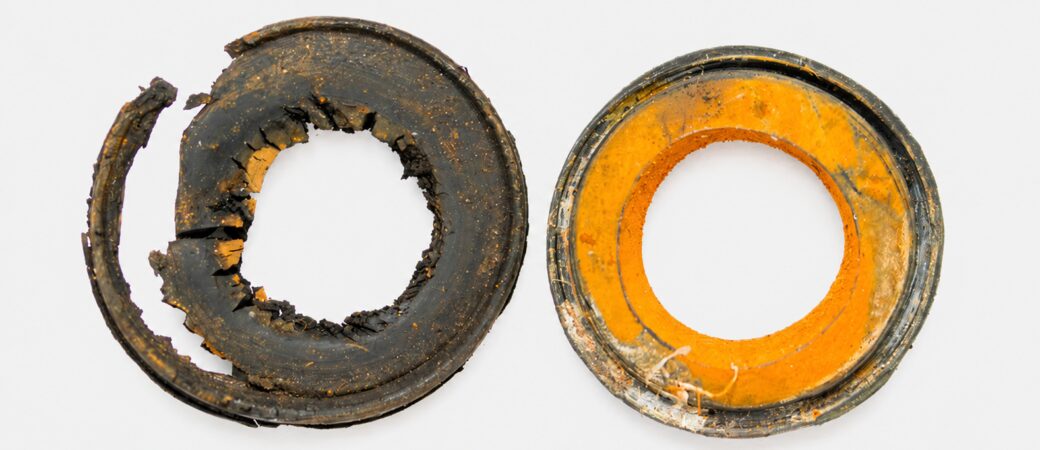
Why application conditions can make or break elastomer performance.
Selecting the right elastomer is an important step in designing a reliable rubber component. But a material that looks right on a data sheet will not necessarily perform as expected in the real world.
A compound may have the appropriate hardness, temperature rating or chemical resistance and still fail prematurely if the actual conditions of the application have not been fully considered.
For engineers and procurement teams, understanding those conditions early can help prevent performance issues, premature replacement and costly redesigns later in the product lifecycle.
A MATERIAL SPECIFICATION IS ONLY THE STARTING POINT
Rubber materials are selected based on a combination of properties, not a single specification.
Silicone, EPDM, nitrile, neoprene and fluoroelastomers each have different strengths and limitations. The right choice depends on what the component will actually be expected to do.
A drawing may specify a material and durometer, but that does not always tell the complete story.
Before selecting or validating a material, consider:
- What temperatures will the part experience?
- Will it be exposed to oils, fuels, cleaning agents or other chemicals?
- Will it be used indoors or outdoors?
- Will it remain compressed for long periods?
- Will operating conditions fluctuate over time?
- Are there regulatory or industry-specific requirements?
- What happens if the component loses flexibility, sealing force or dimensional stability?
The combination of these factors can be more important than any one of them individually.
1. Temperature — Including the Extremes
Operating temperature is one of the first considerations when selecting an elastomer, but average temperature alone may not tell the whole story.
A component may experience startup heat, seasonal temperature swings, repeated heating and cooling cycles, or occasional exposure to temperatures significantly above or below its normal operating range.
These conditions can affect flexibility, hardness, sealing performance (creep) and long-term aging.
Consider not only the normal operating temperature, but also the minimum and maximum temperatures and how long the component will be exposed to them.
2. Chemical Compatibility Depends on the Conditions
Chemical compatibility charts are useful screening tools, but they should not be treated as a guarantee of performance.
Temperature, pressure and chemical concentration can all influence how an elastomer reacts. A material that performs well under one set of conditions may behave very differently when those conditions change.
Vicone's chemical compatibility guide recommends testing materials with the actual chemicals and under the specific conditions of the application before permanent use.
When evaluating chemical exposure, consider:
- The specific chemical or fluid
- Its concentration
- Operating temperature
- Whether exposure is continuous or intermittent
- Whether multiple fluids or cleaning agents may be involved
The question is not simply:
“Is this rubber compatible with this chemical?”
It is:
“Is it compatible under the conditions in which we will actually use it?”
3. Compression Set Can Affect Seal Performance
For gaskets and seals, initial flexibility is only part of the equation.
A rubber component that remains compressed for long periods must retain enough of its original properties to continue providing an effective seal. Over time, some materials can take a permanent set and lose part of their ability to rebound.
The result may be reduced sealing force (creep), potentially allowing moisture, dust or other contaminants to enter.
Vicone encountered this issue in an outdoor lighting application, where the existing gasket material was affected by a combination of fluctuating temperatures, sunlight, ozone and compression set. Re-evaluating both the application environment and the material resulted in a longer-lasting solution.
It is a good example of why a material should be evaluated based on how it will perform over time, not only how it performs when the part is new.
4. UV, Ozone and Weathering Matter Outdoors
Outdoor environments introduce another set of variables.
Sunlight, ozone, moisture and changing weather conditions can gradually affect certain elastomers, potentially leading to hardening, cracking or deterioration.
Materials such as EPDM are often considered for outdoor sealing applications because of their resistance to weathering, ozone and UV exposure. But even then, the complete application — including temperature, compression, expected service life and other exposures — needs to be considered.
Simply specifying “outdoor use” may not provide enough information to make the best material decision.
5. Real-World Conditions Rarely Occur One at a Time
Perhaps most importantly, application conditions rarely exist in isolation.
A seal may face heat + compression + chemical exposure.
An exterior gasket may experience UV + ozone + moisture + temperature cycling.
An industrial component may need to maintain its properties while exposed to fluids + pressure + changing operating conditions.
A material may perform well against each factor individually yet respond differently when several stresses occur simultaneously.
That is why sharing as much information as possible about the actual application can make a significant difference when developing or sourcing a custom rubber component.
HOW TO REDUCE THE RISK
Before finalizing a rubber material, define the real operating environment, not simply the nominal specification.
Rubber behaves differently from metals and many rigid plastics. Its dimensional and performance characteristics can be influenced by the material formulation, cure conditions, temperature, humidity and other manufacturing or environmental factors.
A useful application review should include:
- Minimum and maximum temperatures
- Chemical and fluid exposure
- UV, ozone and weather exposure
- Compression and sealing requirements
- Expected service life
- Critical dimensions and tolerances
- Applicable regulatory requirements
- Unusual or intermittent operating conditions
Testing under representative application conditions can also be especially important when failure could affect product performance, safety or reliability.
LOOK BEYOND THE MATERIAL NAME
Choosing the “right rubber” is not simply a matter of specifying EPDM, silicone, nitrile or another elastomer family.
Just as asking for “steel” does not define a specific grade, EPDM can refer to many different formulations developed for different applications and performance requirements. The same is true of other elastomers.
A more complete material specification — such as an appropriate ASTM D2000 callout, along with the actual application conditions — can help ensure that the selected compound has the properties required for the job.
The more important question is:
Will this specific formulation continue to perform as required under the actual conditions of the application?
Answering that question means looking beyond the material name and considering the full combination of formulation, performance requirements and service environment.
You need custom molded rubber parts?
Let's start a conversation! Tell us about your project and we’ll explain how we can help. Contact us
YOU MIGHT ALSO LIKE
5 Things to Include When Requesting a Quote for a Custom Rubber Part
The Hidden Cost of Bringing Rubber Suppliers in Too Late